 Skip to content

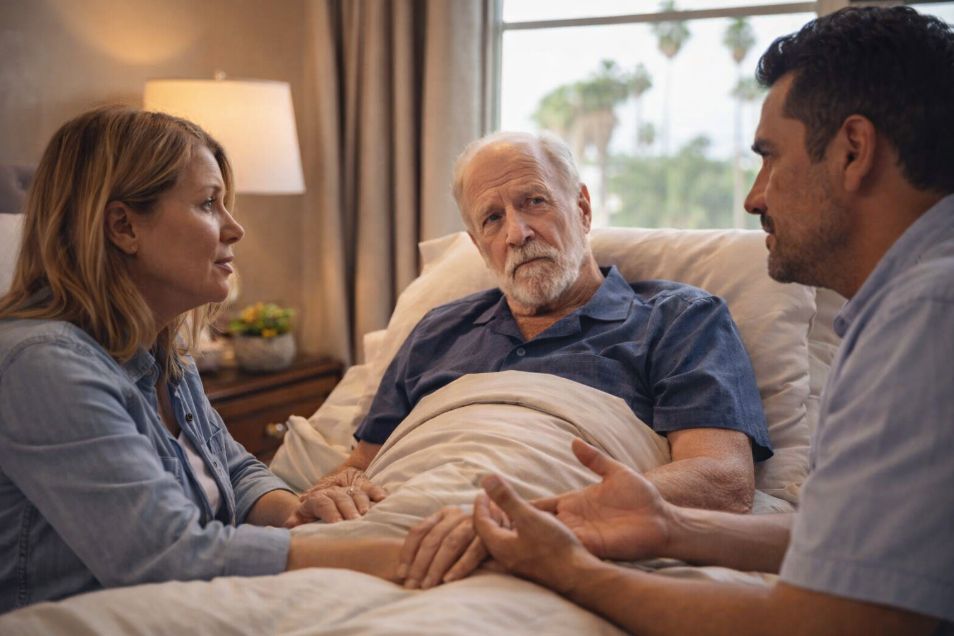
When a doctor first says the word hospice, the room often goes quiet. For family members, it sounds like a call to action. For the person hearing it, it can feel frightening and final. That is why many seniors in Los Angeles refuse hospice care, even when it could truly ease their condition.
Resisting hospice does not mean stubbornness or a lack of understanding. Most often, it is fear. Fear of losing control over one’s life, fear of becoming a burden to loved ones, fear of the word “end.” And when a conversation begins with arguments or pressure, it almost always reaches a dead end.
Why Many Seniors Resist Hospice Care
For a conversation about hospice to avoid turning into conflict, it is important first to understand the reasons behind the resistance. In most cases, they are deeply human.
Many seniors perceive hospice as a loss of independence. They feel the decision has already been made for them and that their voice no longer matters. For someone who has spent a lifetime making their own choices, this can feel like an internal defeat.
Another common reason is myths. Hospice is often imagined as a place where people “wait to die”: cold rooms, minimal attention, and little sense of life. This is especially true if someone once saw an outdated facility or heard a negative story from others. In reality, modern home hospice care in Los Angeles looks very different, but these images are deeply ingrained.
There is also the fear of becoming a burden on family. Some patients refuse help precisely because they do not want to “cause trouble,” even as their physical condition becomes more difficult.
Finally, the word hospice itself sounds like a final verdict to many people. A person may not be ready to accept this stage, even if physically they already need support.
Understanding these reasons is the first step toward a meaningful conversation. Without this, any explanation about the benefits of hospice care in Los Angeles can sound like pressure rather than care.
Start With Empathy, Not Arguments
When a loved one refuses hospice care, a family’s first reaction is often to try to convince them. To explain that it will be better, safer, calmer. But the truth is that arguments rarely work when fear is in control.
For someone facing a difficult stage of life, words about medical benefits can feel like pressure or even like an attempt to “get rid of” them. That is why it is important to begin not with facts, but with empathy.
The most important thing is to show that you hear and respect their feelings. Simply acknowledging fear can ease tension more than any medical explanation. Phrases like “I can see that you’re scared” or “I understand why this idea is hard for you” open space for dialogue instead of defensiveness.
Equally important is knowing what not to say. Statements such as “we have no choice,” “the doctor said so,” or “it’s for your own good” often increase resistance. They take away a person’s sense of control, which is exactly what they are trying to protect.
Instead, it is worth emphasizing that the decision remains theirs. Even in a complex medical situation, the feeling of having a choice restores dignity and calm.
In Los Angeles, many families face this moment at home, especially when discussing home hospice care. In a familiar environment, emotions are even stronger, which makes a warm, calm conversation essential.
Empathy does not mean agreeing with refusal forever. It means giving a person the space to gradually understand that hospice care is not the end, but support.
Understand What Hospice Means to Them
Before explaining what hospice care truly is, it is important to understand what your loved one imagines when they hear the word “hospice.” Very often, resistance comes not from the care itself, but from the image that has formed over time.
For many seniors, hospice is associated with isolation and a complete loss of normal life. Some imagine a closed facility where patients are left alone with their illness, rarely see family, and are treated formally by staff. These images may come from old stories, movies, or someone else’s experience many years ago.
Another common misconception is the belief that hospice means stopping all treatment. People fear they will no longer receive help or that their pain will be left unmanaged. In reality, modern hospice care in Los Angeles focuses precisely on pain control, symptom management, and overall comfort, not passive waiting.
That is why, instead of immediately persuading, it is helpful to ask a simple question: “What does hospice mean to you?” The answer often reveals the true source of fear and allows the conversation to move from abstract ideas to real concerns.
When a person receives accurate information calmly and without pressure, their attitude can gradually change. This is especially true when they learn that home hospice care in Los Angeles allows them to stay at home, in a familiar space, close to loved ones, with respect for their daily rhythm and decisions.
Changing one’s perception of hospice is a process, not a single conversation. But this is often the moment when fear begins to lose its power.
Explain That Hospice Care Can Be at Home
For many people, the turning point in how they view hospice comes with a simple realization: hospice care does not mean moving into a facility. In Los Angeles, most patients receive home hospice care, remaining in their own homes, surrounded by familiar belongings and loved ones.
Home represents control, and that is what people fear losing most. When a senior understands that they do not have to leave their space, be separated from family, or enter an unfamiliar environment, resistance often decreases significantly.
Home hospice in Los Angeles means a team of professionals who come when needed. A nurse helps manage pain and symptoms, a doctor adjusts the care plan, a social worker supports the family, and spiritual support is available if desired. At the same time, the patient retains the right to decide who they want to see and when.
It is important to explain that hospice care at home does not take away freedom. On the contrary, it reduces stressful hospital trips, emergency visits, and physical exhaustion. Many people begin to feel calmer for the first time in a long while when pain and discomfort are finally under control.
For families in Los Angeles, this also means 24/7 support. When questions or concerning symptoms arise, there is no need to panic or call emergency services without understanding the situation. A team that knows the patient and their needs is always available.
When the conversation shifts from the abstract idea of “hospice” to a clear picture of peaceful life at home, many fears gradually fade. This is often the moment when hospice care is no longer seen as a threat, but as relief.
Reframe Hospice as Comfort, Not Giving Up
One of the main reasons people resist hospice care is the belief that hospice means “giving up.” As if life ends at that moment and all hope is erased. In reality, it is the opposite.
Hospice care is about focusing on comfort, dignity, and the quality of each day. When treatment no longer brings benefit or causes more suffering, hospice allows a person to stop fighting pain and exhaustion and begin living more peacefully.
For many patients in Los Angeles, it is after starting home hospice care that a sense of relief appears. Pain becomes manageable, symptoms no longer control every moment, and the body is no longer in constant tension. This allows a person to feel like themselves again, not just a patient.
Instead of endless hospital visits, there is time for simple but meaningful things. Conversations with loved ones. Quiet mornings at home. The chance to feel the sun, fresh air, and silence. These moments often carry the greatest value at the end of life.
For families, this shift in perspective is equally important. Hospice does not “take” a person away. It supports them and the entire family. It is a shared path where no one is left alone with fear, pain, or uncertainty.
Involve a Hospice Professional Early
One of the most common mistakes families make is postponing a conversation with a professional until the situation becomes critical. In reality, a hospice consultation does not mean an immediate decision. It means clarity.
When discussions about hospice happen only within the family, they often become filled with emotions, fears, and mutual tension. Involving a neutral professional helps move the conversation into a calm and safe space. A doctor or nurse experienced in hospice care can explain what to expect, answer difficult questions, and ease tension that may have built up over months.
In Los Angeles, many families turn to Golden Age Hospice Care for this first conversation. These meetings often become a turning point because the patient hears information not from worried loved ones, but from a professional who speaks calmly, honestly, and without pressure.
It is important to understand that an initial consultation does not obligate anyone to begin hospice care. It is an opportunity to ask questions, discuss fears, and understand what support options exist for your specific situation. For many people, realizing that decisions can be made gradually significantly reduces resistance.
Another advantage of involving a professional early is support for the family. Caring for a loved one is exhausting not only physically, but emotionally. A hospice team helps families understand what is happening and ensures they are not left alone with difficult decisions.
When the Conversation Takes Time — and That’s Okay
Even after sincere conversations, explanations, and professional consultations, a decision about hospice may not come right away. And that is okay. For many people, accepting hospice care is not a single step, but a gradual internal process.
Some need time to adjust to a new reality. Others need several conversations to stop fearing the word “hospice” itself. It is important to remember that resistance does not always mean a final refusal. Often, it is a way to protect oneself from emotional overload.
For families, this can be very difficult. When you see a loved one struggling, feelings of helplessness and anxiety naturally arise. In such moments, support from a hospice team in Los Angeles helps not only the patient, but the entire family remain calm, patient, and confident that no important moment is being missed.
Sometimes life itself gradually leads a person to understand that help is needed. As symptoms become more complex and fatigue accumulates, hospice begins to look less frightening. It starts to be seen as support that makes each day easier.
The most important thing is to maintain respect for a person’s choices, even if they take longer to form than you would like. Calm presence, honesty, and ongoing support often do more than any argument.
Compassionate Hospice Care in Los Angeles
If your loved one is hesitant or refuses hospice care, you do not have to go through this journey alone. Golden Age Hospice Care supports families throughout Los Angeles, providing home hospice care, professional medical support, and genuine human understanding at every stage.
We are ready to talk, answer your questions, and help you explore your options without pressure, without rush, and with respect for your situation.
Contact us when you are ready. We are here.